
The Pure Praxis Method
What's Behind the Work
Performance-based, scenario-driven training that keeps people present and prepares them to act under real-world pressure.
The work is grounded, human, and intentionally engaging, because people do not learn or practice well when they shut down.
This method is built for environments where attention matters, behavior matters, and hesitation has consequences.
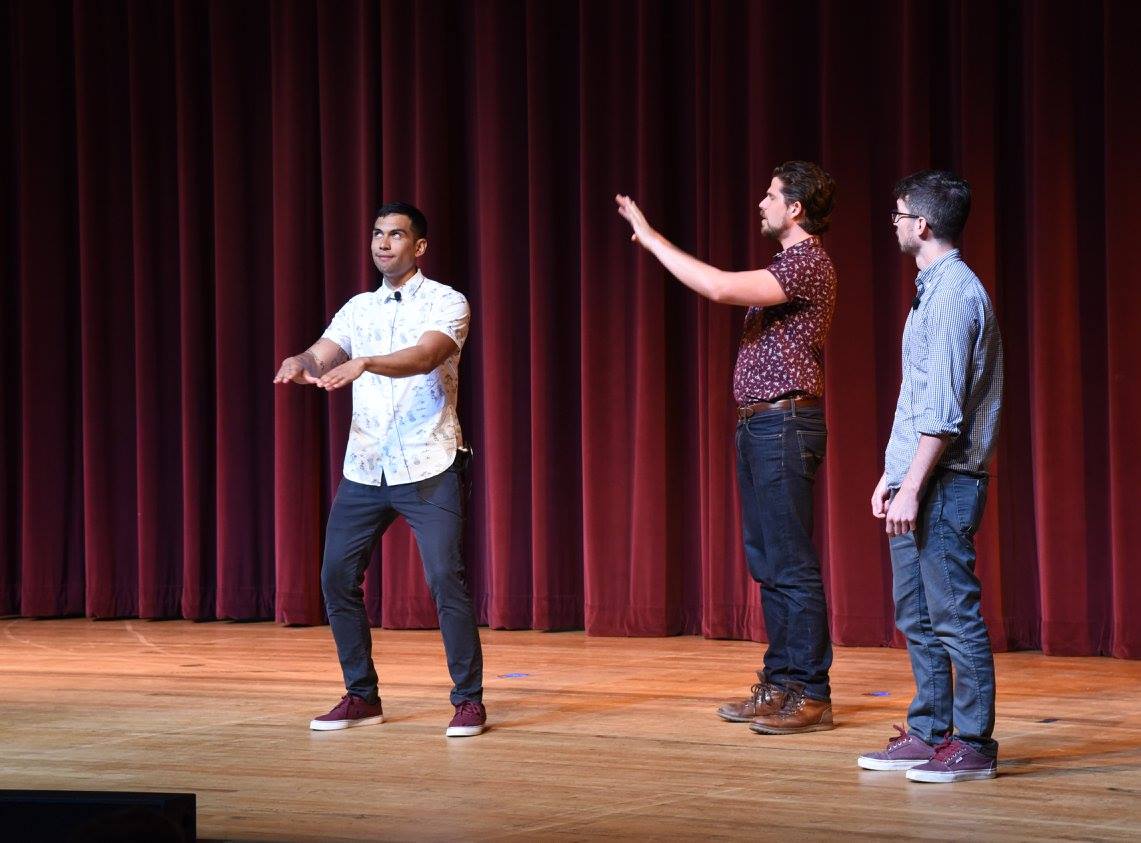
Why Engagement Matters
Pure Praxis uses tone intentionally.
Sometimes that includes humor, not to trivialize serious topics, but to keep people present long enough to practice meaningful responses.
When participants disengage, learning stops. When they stay present, practice becomes possible.
Humor is not the point.
Readiness is.
How the Method Works
Pure Praxis follows a simple, disciplined arc: Connect → Inform → Act.
To get there, participants must first stay present. That’s where tone, realism, and—at times—humor play a role.
1. Connect — Recognition Through Realism
Professional actors perform realistic scenarios that mirror the organization’s environment, culture, and challenges.
Scenes are intentionally grounded and human. They often include moments of levity—not to soften the subject, but to reflect reality and reduce defensiveness.
When people recognize themselves in what they’re watching, attention stays with the moment instead of drifting away from it.
The goal isn’t comfort.
It’s presence.
2. Inform — Meaning in Context
Facilitators guide participants through what they just witnessed.
Policy, risk factors, reporting options, and resources are connected directly to the scenario—clearly, without jargon or abstraction.
Because participants are still engaged, information lands differently. It becomes usable rather than theoretical.
This is where understanding replaces assumption.
3. Act — Rehearsal Under Real Conditions
Participants may step into the scenario and practice responses live with trained actors.
This rehearsal is voluntary, supported, and professionally facilitated. Psychological safety is actively maintained.
Participants practice language, timing, and intervention in conditions that resemble reality—not scripted perfection.
This is where readiness is built.